
A Decision-Making System
for Spatial Programming
Most architects prescribe solutions. We built a quantitative toolkit instead.
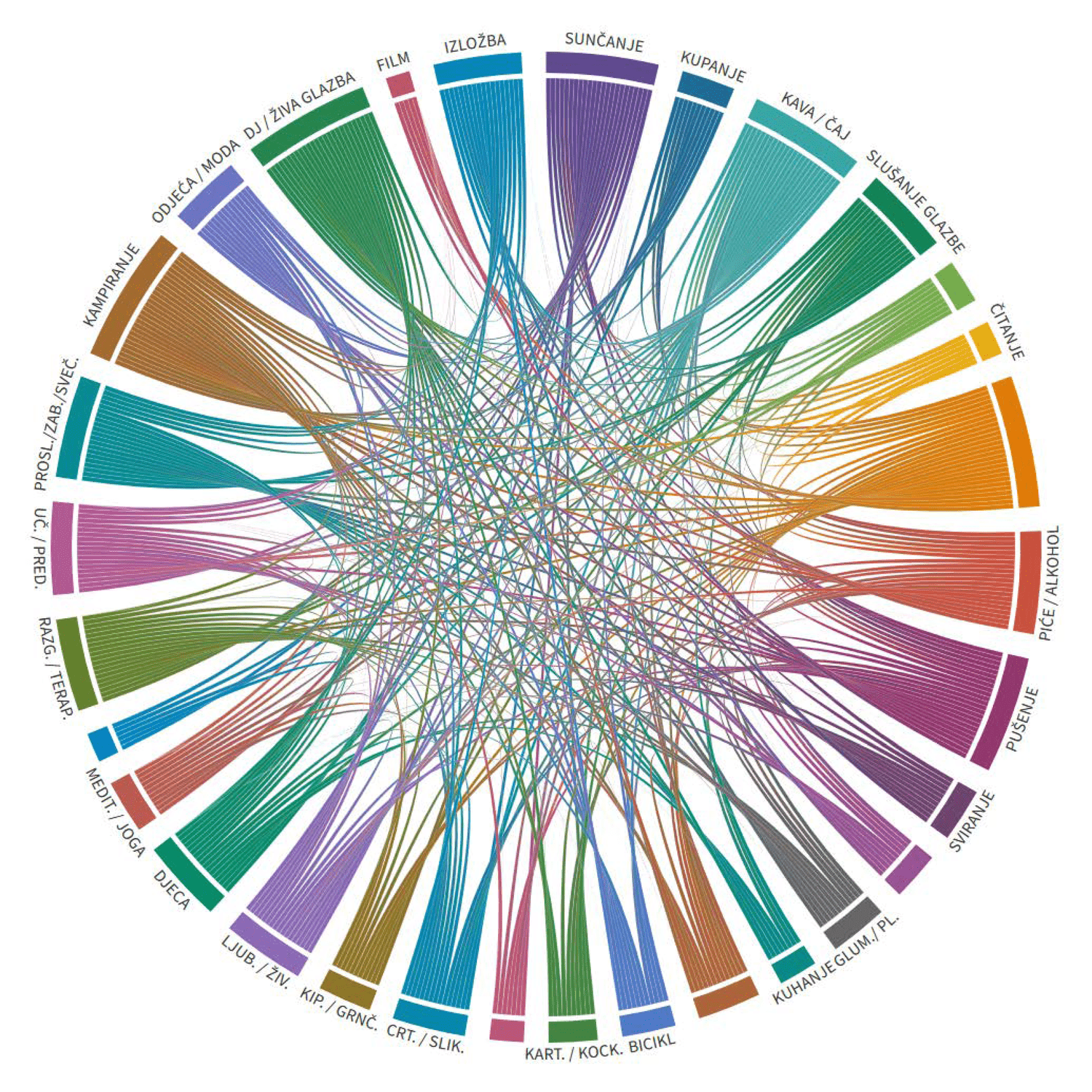
465 compatibility relationships mapped. Infinite configurations possible.
What the client received: A toolkit that lets them optimize their program mix as opportunities evolve—not a single prescribed answer that becomes obsolete when conditions change.
↓ Keep scrolling to see how it works
How It Actually Works
Three layers of analysis that transform vague questions into quantified decisions.
Activity Compatibility
What we did: Catalogued 31 plausible activities for the site—we called it the "Garden of Pleasures." Coffee, meditation, exhibitions, live music, workshops, camping, yoga, theater, film screenings. Then we tested all 465 possible pairings for compatibility. Some activities work together harmoniously. Some create fundamental conflicts.
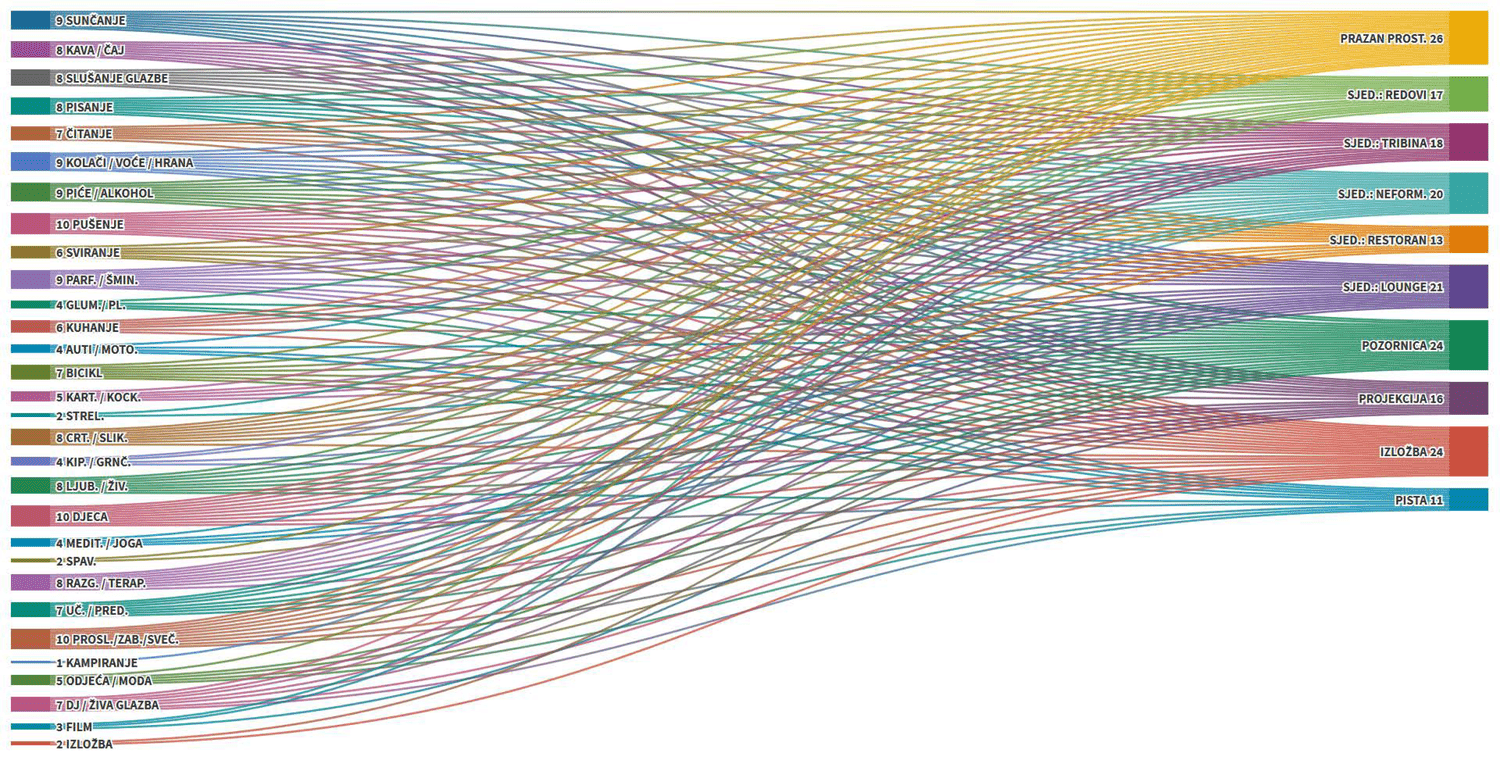
Why it matters: Coffee service is compatible with 28 out of 31 activities—it's essential infrastructure that works everywhere. Archery is compatible with only 3 activities. Before investing a single euro, you know which programs maximize flexibility versus which create dead zones.
What This Means for You:
You design program mixes that maximize revenue per square meter instead of guessing. You know which activities are social and flexible versus specialized. Identify and avoid conflicts before you've invested in equipment or hired staff.
Spatial Configurations
What we did: We defined 10 archetypal spatial "dispositions"—fundamental ways of organizing space. Empty space, Restaurant, Theater, Lounge, Stage, Exhibition walls. Each disposition enables different activities while constraining others.
Think of dispositions as the interface between abstract programs and physical reality. They're spatial configurations that can be deployed depending on what you want to offer that day.
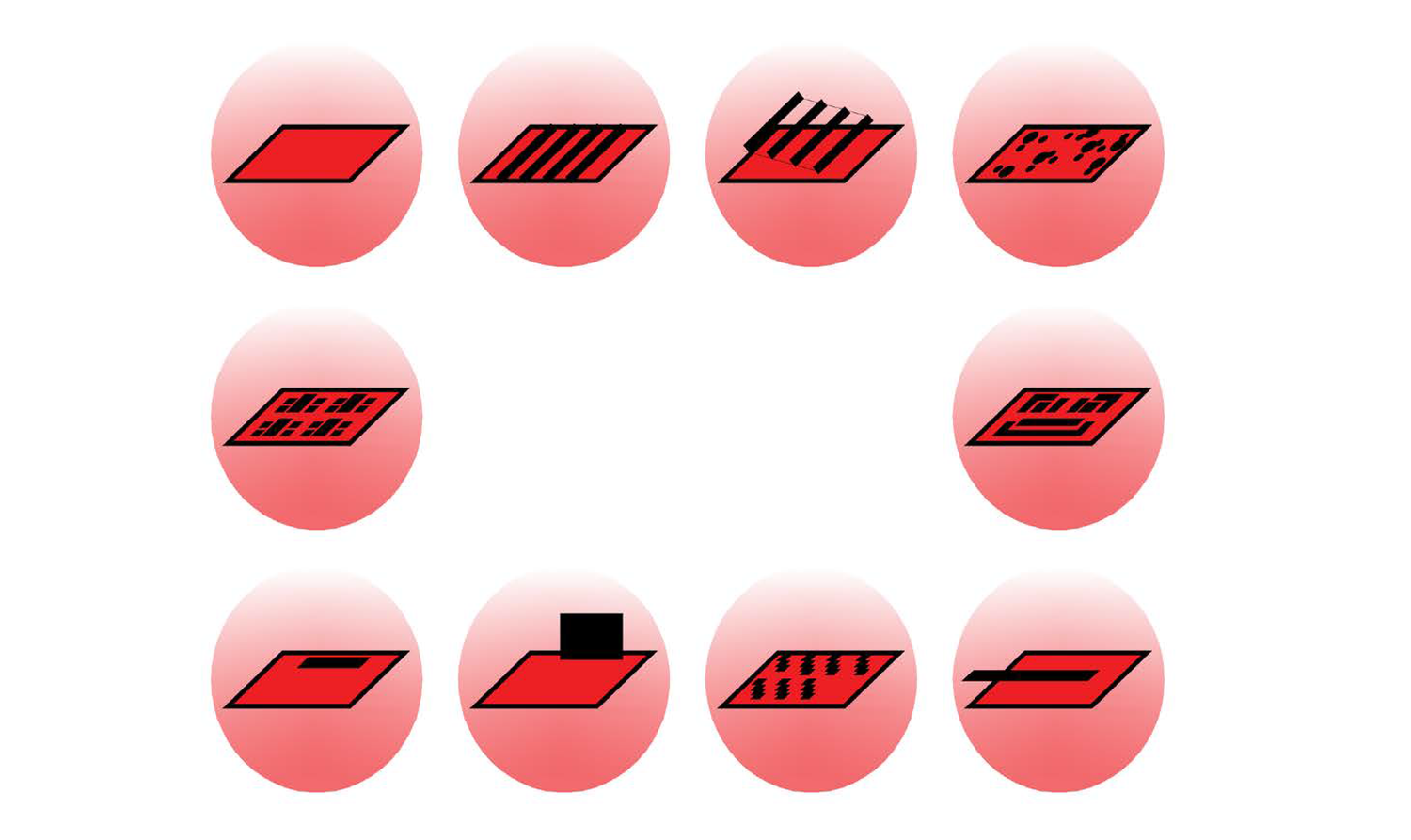
Why it matters: Restaurant-style seating unlocks 15 different programs—formal dining, seminars, board games, therapy groups. That's one furniture investment serving multiple revenue streams. The ROI calculus becomes immediately clear.
What This Means for You:
You're not trapped by single-purpose equipment. One set of tables and chairs serves dining, workshops, and creative sessions. You can pivot your offering without replacing your equipment. Maximum flexibility, minimum redundant investment.
Exact Capacity Modeling
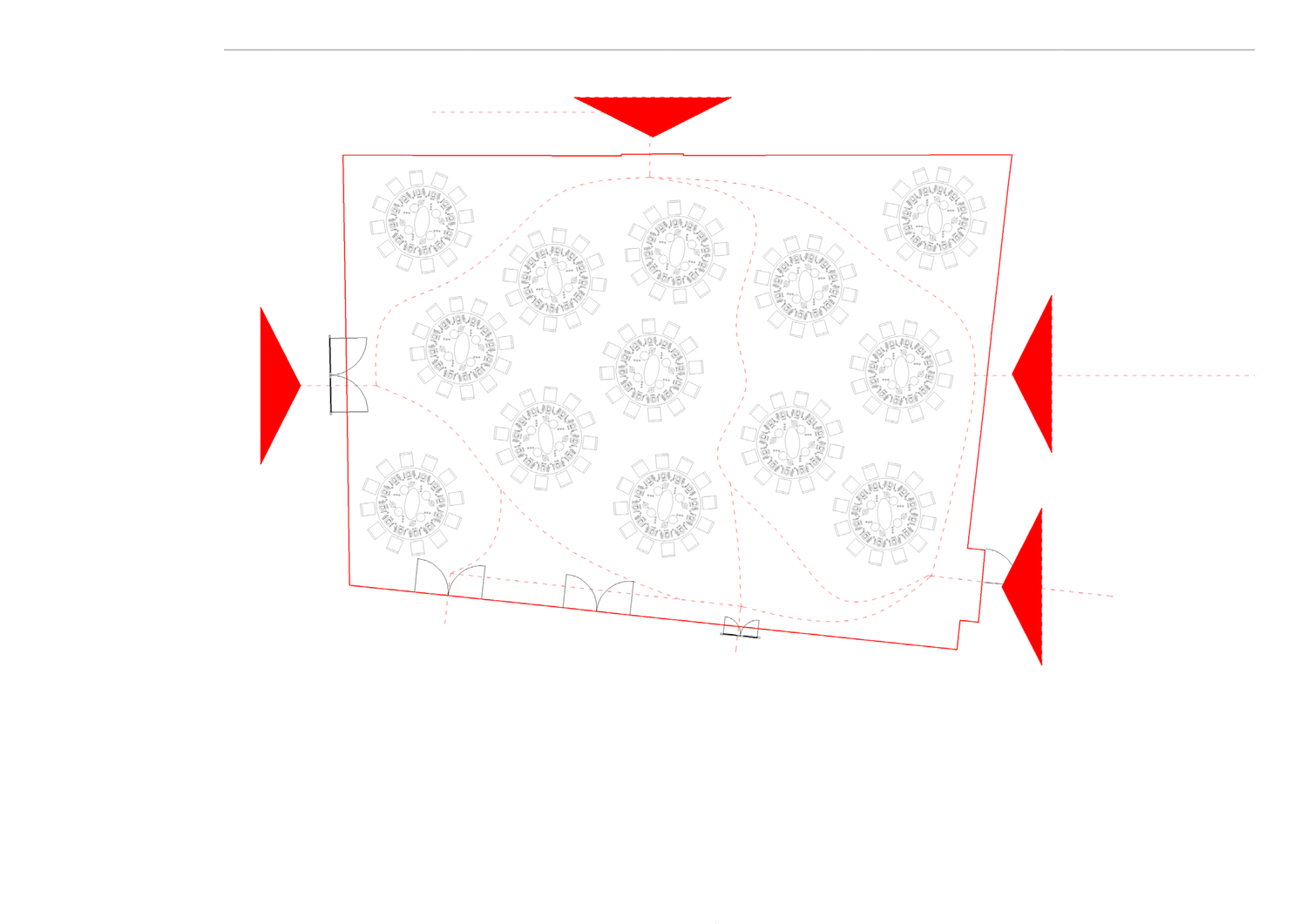
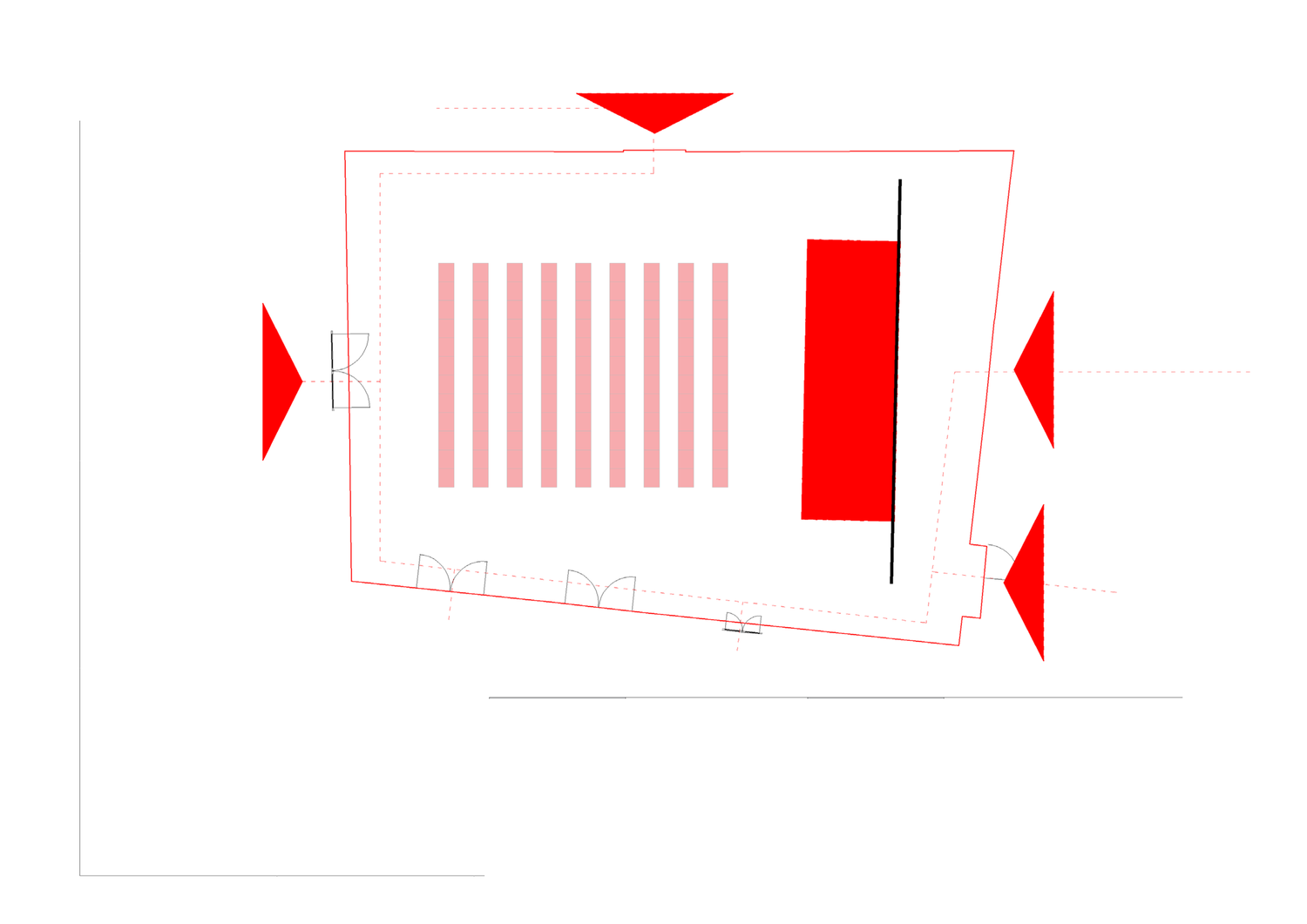
What we did: Clients need hard numbers. For each of the 8 major zones, we created exact floorplans showing every possible disposition with real dimensions and furniture counts. Actual measurements: "47 chairs, 12 tables, 2 servers."
Every configuration has been tested with actual furniture dimensions and service access. The client knows exactly what they're committing to before buying a single chair.
What This Means for You:
Budget accurately from day one. You avoid the trap of promising 60 seated guests when you can only comfortably serve 47. You know exactly what "full capacity" means for each layout.
One Possible Configuration
To demonstrate how the client would actually use this toolkit, here's one complete scenario. This isn't THE answer—it's ONE of countless possible configurations.
Scenario A: Multi-Program Hospitality Complex
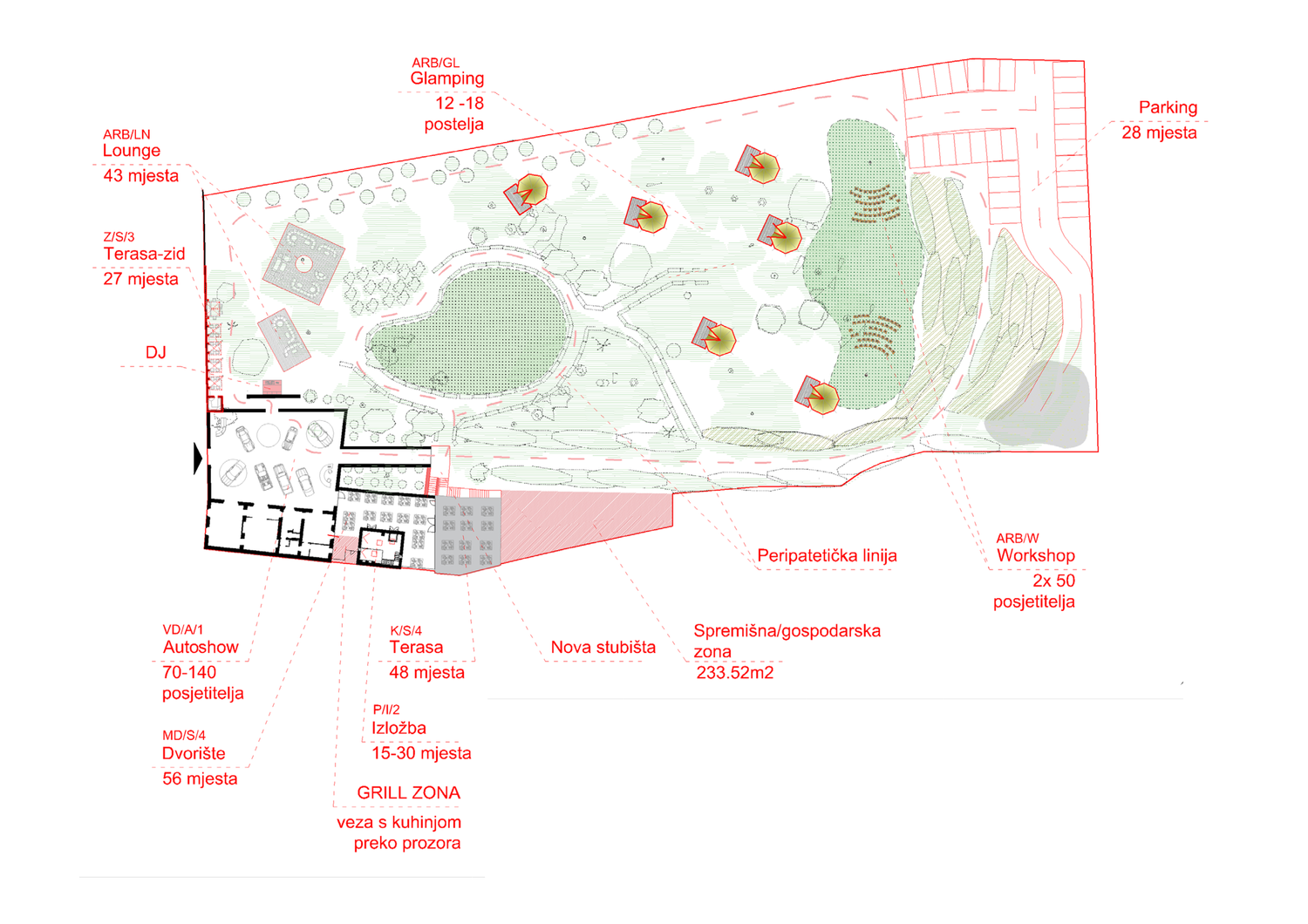
Complete site activation showing multiple compatible programs running simultaneously across different zones. Each color represents a different program or service area.
The Program Mix:
- Glamping Accommodation (Garden Area) 6 luxury tents • 12 guests total • €150-250 per tent per night • Includes breakfast • Access to all site amenities
- Auto Exhibition (Large Courtyard) 8 vintage vehicles on display • VIP lounge seating for 35 • €15-25 entry fee • Weekend event • Pairs with dining
- Restaurant Service (Small Courtyard + Roof Terrace) 56 total seats (32 courtyard + 24 roof) • Full service dining • €25-45 per person • Serves both event attendees and accommodation guests
- Café & Lounge (Arboretum Wall) 18 casual seats • Coffee, drinks, light bites • €5-15 per person • All-day service • Accessible to all guests
- Creative Workshop (Auxiliary Building) 16 participants • Photography, painting, writing workshop • €40-80 per person • 3-hour session • Can run multiple per day
All of these programs are compatible according to the correlation matrix. They can run simultaneously without conflict. The glamping guests have accommodation. Exhibition visitors have food and beverage options. Workshop participants can stay for dinner. Multiple revenue streams from one site activation.
The Key Insight:
This scenario demonstrates several critical points:
Compatibility in practice: All five programs can operate at the same time because the analysis showed they don't conflict. Noise levels, spatial requirements, circulation patterns—all resolved.
Multiple monetization paths: Accommodation fees + exhibition tickets + dining revenue + café sales + workshop fees. The client isn't dependent on a single revenue stream.
Flexibility for the future: If the auto exhibition doesn't work, the correlation matrix shows 26 other programs that work in that space with the same infrastructure. The client can pivot without starting from scratch.
And this is just ONE configuration. The toolkit contains enough analyzed programs, spatial dispositions, and capacity models to generate dozens of other viable scenarios. The client can test new combinations as market conditions or opportunities evolve.
A System, Not a Solution
We didn't tell the client "build a restaurant." We gave them the intelligence to make those decisions themselves.
When market conditions change, the methodology remains relevant. The client can recombine programs and test new configurations without coming back to us.
Project Information
Facing a Complex Brief?
Let's discuss how this systematic approach could work for your project.
Get in Touch