
Greco-futurism: anti-Frampton [EN]
-
In 1983 Kenneth Frampton placed an architecture of resistance between two fences: high-tech and populist historicism, symptoms of Capitalism leaving architects only the surface. Social media teems with AI renders of future cities: antiquity surviving into the 23rd century. If retro-futurism is an archaic vision of the future, Greco-futurism is the futurisation of the past. This rare positive vision embraces both poles Frampton warned against: a critique of Greco-futurism, and a reason to re-examine Frampton. As the gap between image and drawing vanishes, the question is practical: will AI tools bring popular taste into architecture?
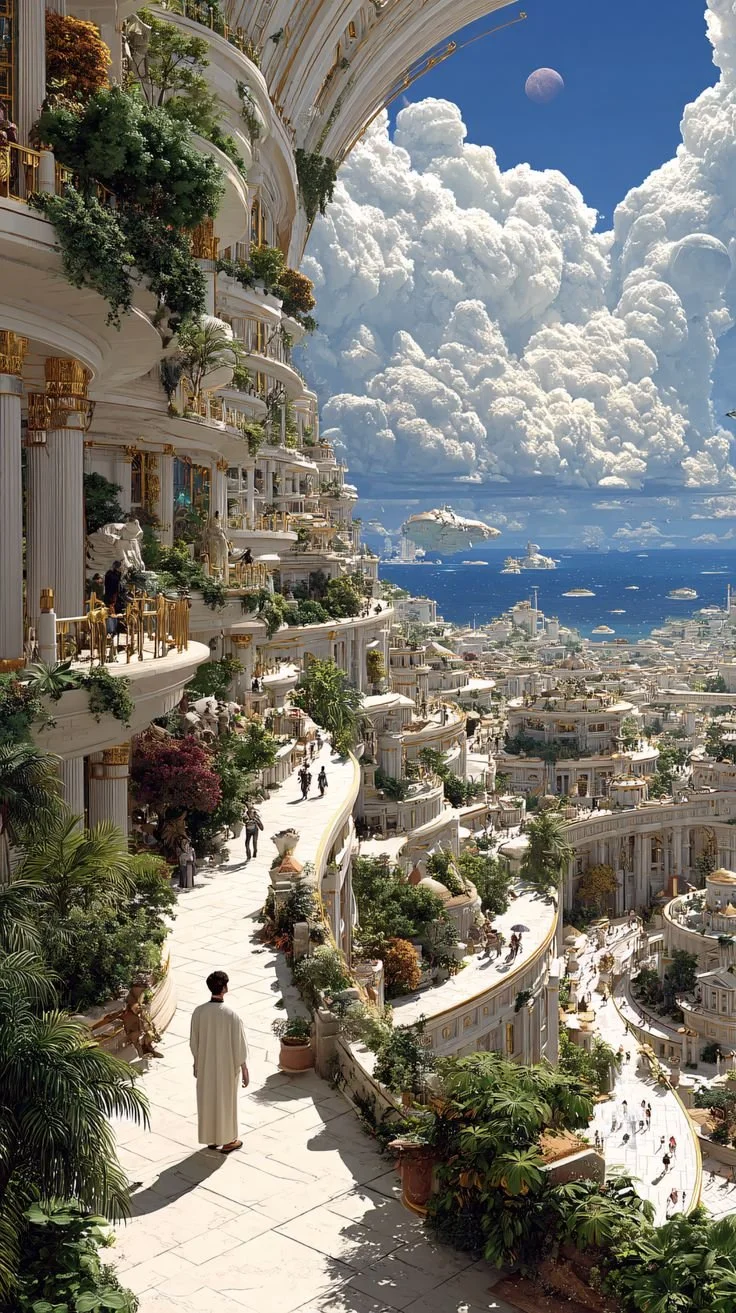
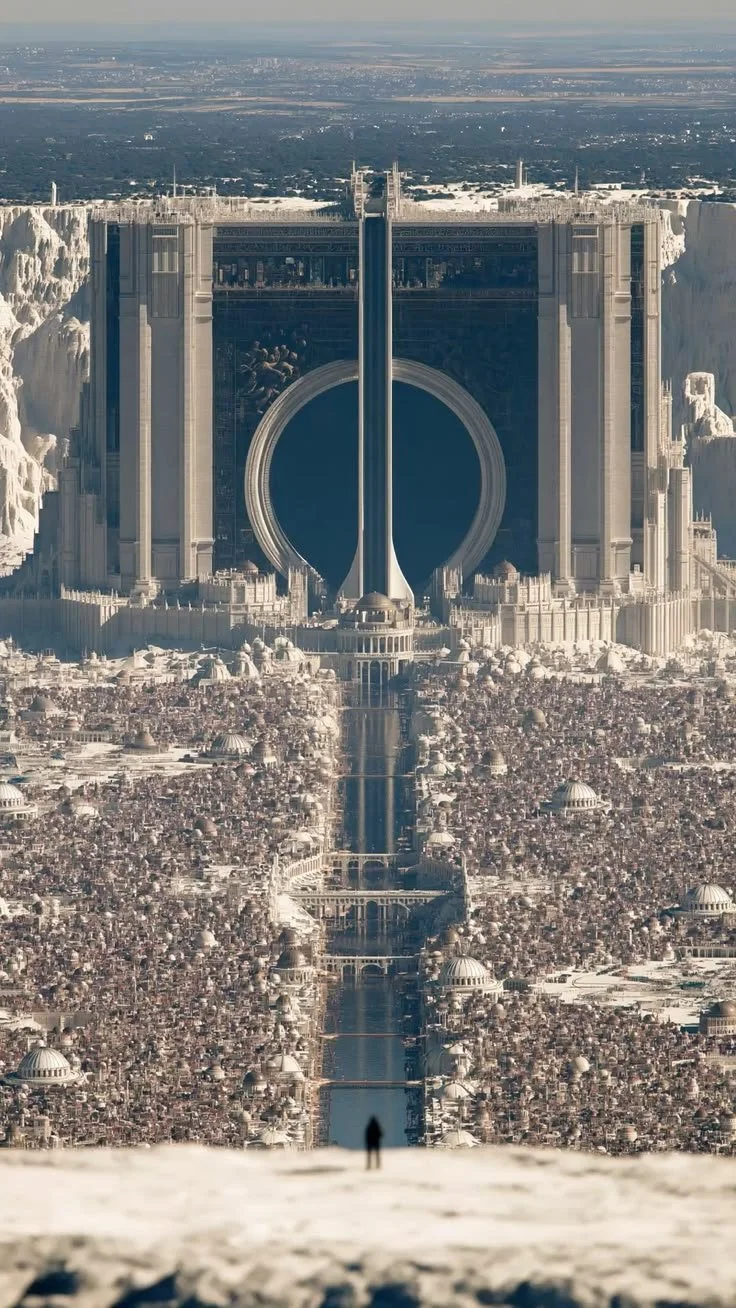
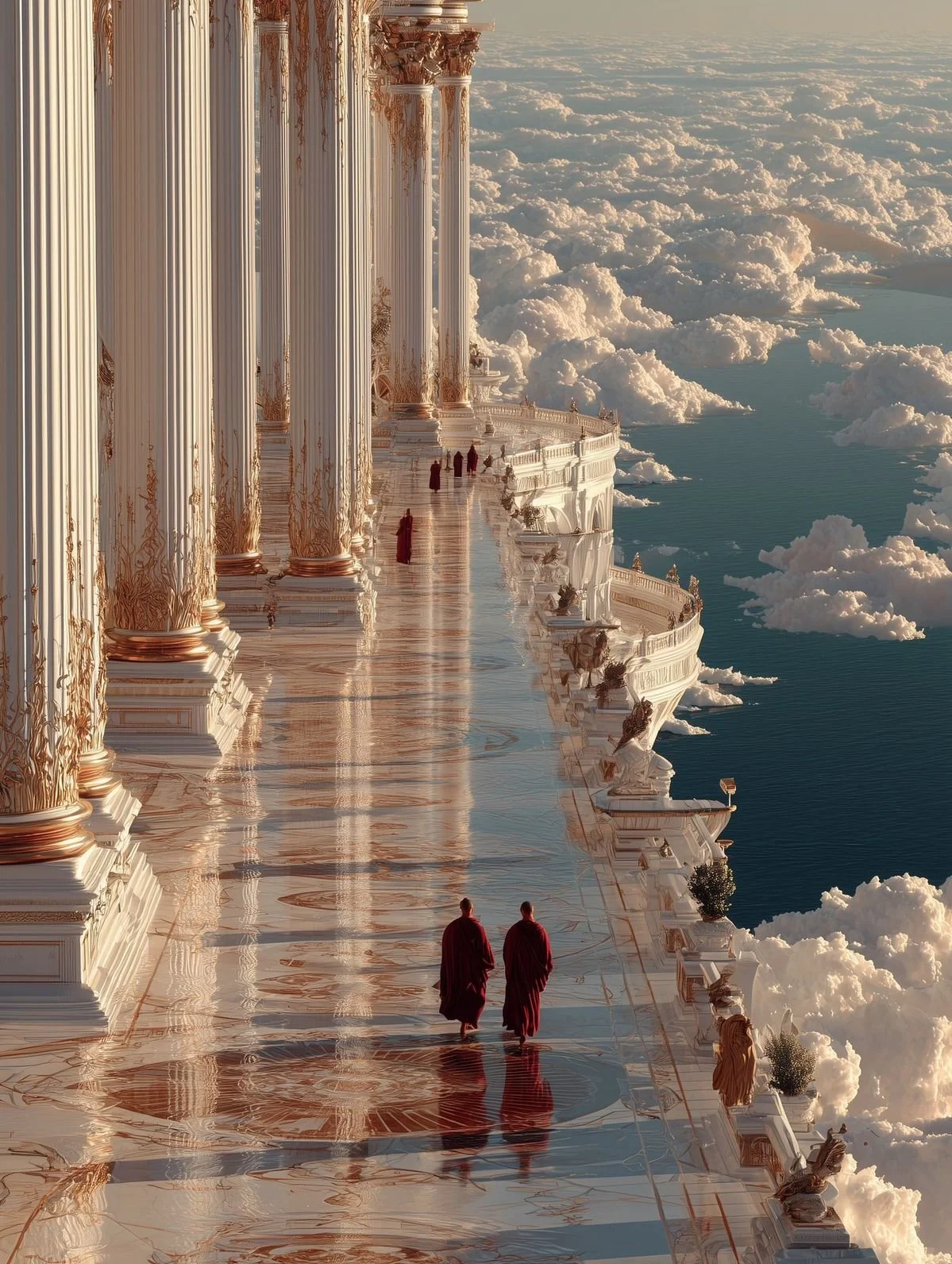
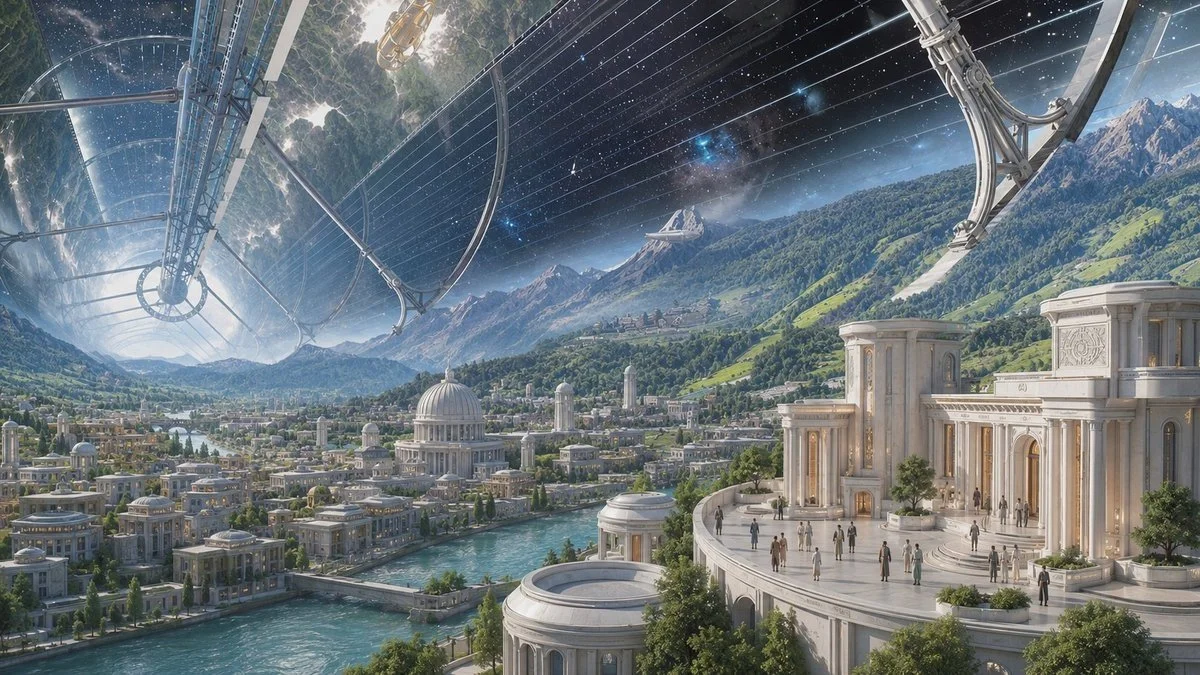
In his seminal 1983 essay Towards a Critical Regionalism: Six Points for an Architecture of Resistance, Kenneth Frampton takes on the problem of homogenisation in architecture. Writing in the tradition of the Frankfurt School and cultural critique, he posits that, in simplified terms, Capitalism has appropriated the key aspects of the architectural profession, leaving within the architects' reach only the superficial layer as the domain in which they are called upon to make decisions. Through his six points Frampton tries — not especially successfully, as it turns out — to steer the profession towards resisting this appropriation. What interests us here is that Frampton places these six points between two fences, in the zone between two opposing currents: high-tech architecture and populist historicism. In his view, both currents are the wrong reaction to a correct and still relevant diagnosis.
With the advent of strong and ever stronger AI, at every turn on social media we come across renders of futuristic cities and buildings. They look like a vision of classical Hellenistic civilisation that has survived unbroken into the 23rd century. Retro-futurism is a term already widespread in popular usage: it denotes images and other depictions of the future as it was imagined in various periods of the past — flying cars, space-station cities under glass domes and the like. These AI-generated images, often labelled Greco-futurism, are something diametrically opposite: if retro-futurism is an archaic vision of the future, Greco-futurism is the futurisation of the past.
Like every vision of the future, Greco-futurism is first of all a mirror of the culture and the moment in which it arises. A diagnosis of what this aesthetic signifies is a large and interesting subject that deserves a piece of its own. From the point of view of architecture, what is interesting is that Greco-futurism, one of the rare positive visions of the future in a sea of dystopia, has embraced both of the very poles Frampton speaks against: high-tech and populist historicism. From one vantage point this is a critique of Greco-futurism; from the opposite one, it is an occasion to re-examine Frampton's points.
Every new technology of architectural design has left its mark on architectural expression: from Brunelleschi's invention (discovery?) of linear perspective to CAD tools and parametric design onwards. AI (“SI”?) already stands alongside BIM, and there are signs that BIM tools, if not the whole paradigm, will be overtaken and replaced by a new generation of AI-driven tools, ever easier to use. If CAD gave us the aesthetic of Frank Gehry, and parametricism that of Patrick Schumacher, it remains to be seen what the expression of AI tools will be: will the democratisation of the means of production in architecture lead to a greater presence of popular taste in architecture? Are Technoclassicism, Neo-antique, Sandal-punk or Greco-futurism really the form architecture will take in the coming future, now that the gap between the image and the construction drawings is rapidly vanishing?
translated from Croatian with the help of AI
