
Don't Draw the Dining Room [EN]
-
What does an architect know? Cognitive scientist John Vervaeke distinguishes four kinds of knowing: propositional ("knowing that"), procedural ("knowing how"), perspectival ("knowing what it is like") and participatory ("knowing by being together"). Architectural education traditionally covers the first two, often with an emphasis on the procedural. The third and fourth kinds of knowing are acquired through decades of practice, travel, and exposure to different spaces, atmospheres and social situations. Without a vocabulary they remain unnamed and elusive, passed on intuitively, by word of mouth: "Don't draw the dining room, draw the lunch," academician Dinko Kovačić used to tell his students. Vervaeke's vocabulary makes this indigenous knowledge of architects systematic and speakable, and opens the way to a more exact conversation about what architects know, and how.
What follows is an article I wrote in the summer of 2022. It was written with the aim of explaining, first of all to myself and only then to a possible reader, why the work of John Vervaeke is useful for understanding architectural education and pedagogy.
A CHAIR OR A WEAPON

John Vervaeke
"Presumably, you're seeing this as a chair," says John Vervaeke, and adds: "I hope none of you are right now seeing it as a weapon." For a moment a hush falls over the small lecture room in Cambridge. Vervaeke, a Canadian in his robust fifties, is an associate professor in the Department of Psychology at the University of Toronto. This is a fragment of a lecture titled "Rationality and Ritual", which Vervaeke was invited to give at the University of Cambridge. Vervaeke mentions that for a couple of decades, besides his work as a scientist, he has also been a professional Tai Chi instructor. The mention of a weapon and of martial arts, together with Vervaeke's energetic delivery, suddenly makes his latent physicality salient to the audience. "But," he adds, "in different situational awareness, you would. Right?"
Vervaeke is a scientist working in cognitive science. In professional circles he has attracted interest with his 4P/3R model of cognition: according to an article published in Psychology Today, Vervaeke's theory is a possible bridge across a gap that dates back to the Enlightenment, a gap in how we define the relationship between mind and matter, between scientific and social knowledge. The lecture "Rationality and Ritual" is available in full on Vervaeke's YouTube channel. In it the professor presents his model of cognition through three recent scientific papers on the unusual practices of the NASA scientists who operate the robotic rovers on Mars. The particular focus of the lecture is the ways of knowing.
Just as Vervaeke observes and explains the practices of the NASA scientists through his model, in this article we will look at the domain of architecture in the same order and through the same lens. Without passing judgement on the scientific merit of Vervaeke's theory, it nevertheless offers a new and possibly useful vantage point on the ways of knowing in architecture, as a medium and as a profession, and a new vocabulary in which we could speak about these kinds of knowing more precisely.
THIS WE ALL KNOW
Vervaeke speaks of four kinds of knowing: 1) propositional, 2) procedural, 3) perspectival, 4) participatory. These are the "4P" in the name of the "4P/3R" model.
The first kind is propositional knowing. Put simply, to know propositionally is "knowing that": knowing that water boils at 100°C, that a right angle has 90°, and so on. In architecture we "know that" the formula relating the tread and riser of a stair reads "2 × tread + riser = 63 cm", that the site coverage ratio is the ratio between the area of the building's vertical projection onto the plot and the area of the plot, that an ETICS system consists of the layers… In short, all facts, every piece of knowledge that can be answered with "true" or "false", belong, in Vervaeke's classification, to propositional knowing.
The second kind is procedural knowing: if to know propositionally is "knowing that", to know procedurally is "knowing how". Figuratively speaking, procedural knowing is more like a verb, while propositional knowing is more like a noun. To know procedurally is to know by doing: tying knots is procedural knowing, and so is modelling on a computer. Design, the basic architectural skill, fits Vervaeke's definition of procedural knowing faithfully: "Procedural knowing is the cognitive space within which we choose and transform our propositions so as to use them well… It is where we develop the skills of how to select, coordinate, and use our propositions appropriately." Vervaeke's claim that this is a separate kind of knowing is also grounded in psychology: each kind of knowing has its own kind of memory, and procedural memory is distinct from semantic memory, which holds the propositions we have memorised. You can damage one without affecting the other: a person can lose the ability to remember most facts and still keep the skills that are procedural knowing, such as playing the piano.
It is worth pointing out that we can know the same piece of knowledge in more than one way: we can know the formula for stairs by heart, as a proposition, or "in a different currency", as a procedure. To know the stair formula procedurally means to sketch a section through the staircase and draw a diagram of the path of the foot as it climbs. In the sketch the path of the foot is visible, so without memorising the formula we can establish that the distance the foot covers in one step up is two risers and one tread. From semantic memory we recall that the sum of these lengths should equal the length of an average adult's stride, and that this length is 63 cm. Applying procedural knowing we establish that the formula is in fact "2 × riser + tread = 63 cm", and not as stated earlier in this text: our semantic memory has deceived us.
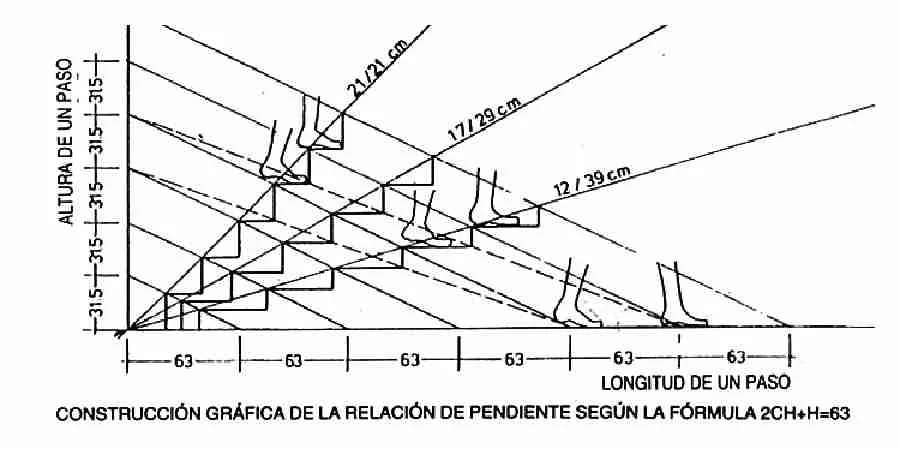
Vervaeke notes that propositional knowing results in beliefs, and that its normative sense, the way we know we are doing it well, is conviction. Procedural knowing results in skills, organised into expertise, and its normative sense is empowerment: a kind of sovereignty that comes from having at our disposal an apparatus we can set in motion at will and use to produce results.
The way knowledge is passed on to architects and future architects at schools of architecture can almost entirely be described as "knowing that" or "knowing how". In fact, architectural education to a certain extent favours procedural knowing: this shows in the encouragement students receive to question assumptions and not to take conventions for granted. Rather than being taught mere craftsmanlike application, students are meant to become a cadre equipped with an apparatus with which they create their own means of acquiring new knowledge, a cadre that "engineers", that thinks autonomously.
Still, we can sense that something essential has been left out. To practise architecture it is not enough to memorise a litany of propositions and some procedures for handling them. The practice of architecture needs some additional knowledge that fits the description of neither "knowing that" nor "knowing how". In articulating this remainder Vervaeke is of the greatest use to us, because he offers a conceptual framework that can illuminate and explain what — or more precisely, how — architects come to know.
THE THIRD KIND OF KNOWING
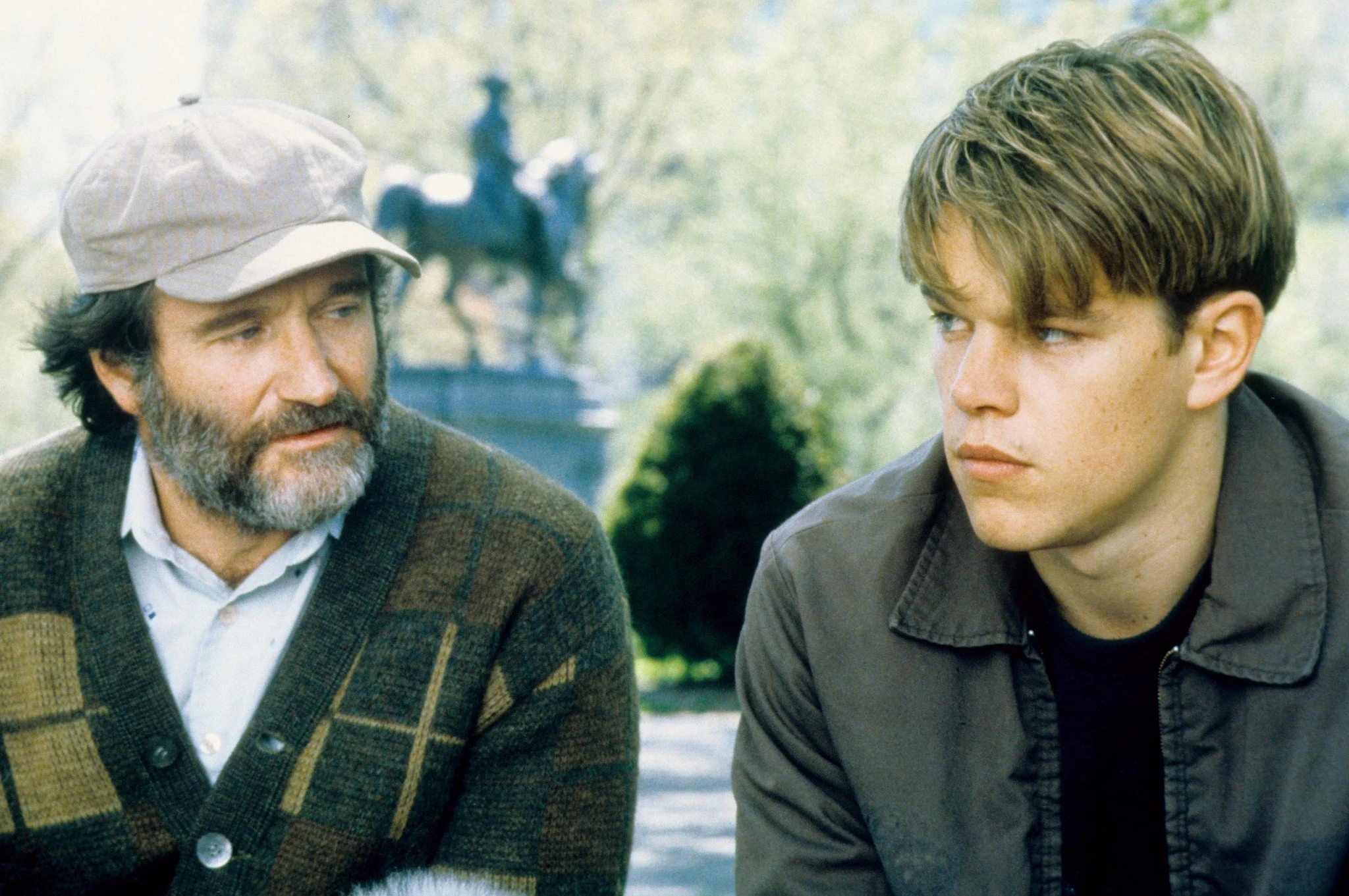
Sean (R. Williams) and Will (M. Damon)
An illustrative example of the third kind of knowing can be found in a scene from the film Good Will Hunting (1997; dir. Gus Van Sant), in which the psychiatrist Sean (R. Williams) talks to Will (M. Damon), a young and troubled genius who uses his intellectual superiority to unsettle the psychiatrist and subvert the therapy:
S: [I] Thought about what you said to me the other day. About my painting. Stayed up half the night thinking about it. And then something occurred to me. (...) You know what occurred to me?
W: No.
S: That you're just a kid, and you don't have the faintest idea what you're talking about. (...) If I asked you about art, you'd probably give me the skinny on every art book ever written. Michelangelo? You know a lot about him. Life's work, political aspirations, him and the Pope, sexual orientation, the whole works, right? But I bet you can't tell me what it smells like in the Sistine Chapel. You've never actually stood there and looked up at that beautiful ceiling. Seen that. (...) You're an orphan, right? You think I know the first thing about how hard your life has been, how you feel, who you are, because I read Oliver Twist? Does that encapsulate you?
What is it that Will, for all his boundless knowledge, does not know, because everything he knows he learned from books? What is it that Sean knows because he came to know it first-hand? Will knows about Michelangelo and the Sistine Chapel in the first, propositional way, but Sean knows the very same thing in a different way. The way Sean knows the Sistine Chapel Vervaeke calls perspectival knowing. To know something perspectivally means "knowing what it is like".
In the Cambridge lecture Vervaeke asks the audience whether they can remember their last birthday party, and then points out that what they are remembering is not a set of facts but the perspective they had: how they were sizing up the situation, what was salient to them, what mattered to them. The way we remember our birthday, the way Sean remembers the Sistine Chapel, is from our own particular perspective, and from it we know "what it was like", "what it was like to be there". The memory that goes with this kind of knowing is called episodic memory, and it is different, Vervaeke points out, from both procedural and semantic memory.
Over the course of the lecture Vervaeke gradually introduces the concepts needed to understand his model, and with them his model becomes useful to us. One of these concepts, key to understanding perspectival knowing, is salience. "Salience means how things stand out, like —" he claps his hands — "that grabs your attention, right?" he demonstrates to the audience. So things in the environment can be salient because of some quality of their own: sound, shape, colour, size… But equally, he adds, you can make things salient by directing your attention to them. If the reader directs attention to their tongue, it will become salient to them that the tongue can in fact never be placed in the mouth in a position that is entirely comfortable.
What happens is that various things and phenomena come to the foreground of our attention, then sink into the background while others rise to the foreground. Vervaeke calls this foregrounding and backgrounding. The process is continuous and forms a kind of landscape, in which some things are salient and others are in the background, a landscape that is dynamic and constantly shifting: Vervaeke calls it the salience landscape. In the reader's salience landscape this article is, for now, in the foreground (let us hope). If the reader gets a notification on their phone while reading, the notification will grab their attention and push the article into the background. A few moments later the phone will (again, let us hope) be pushed back into the background as the reader turns their attention back to this article. What is key, however, is that what is salient to us at any moment depends on two poles: on the way the environment is disclosing itself to us, and on our mental set, our present state of mind, at that moment.
It is the mental set that determines what will be salient in the salience landscape and what will be in the background. States such as extreme hunger change the mental set, and the new mental set then shapes a dramatically different salience landscape. Besides salience, the mental set affects the way we aspectualise things, which Vervaeke explains with the example of the chair: the same object can be a weapon or a piece of furniture, just as an apple can be food, a projectile or an artistic motif. These are all different aspects of the same object, but which aspect comes to the fore in a given situation depends on our mental set at that moment.
Besides propositional and procedural knowledge, architects, like many other specialists, build up and strengthen a specialist mental set. This mental set, the apparatus of perspectival knowing, is calibrated in architects to make salient in the environment those things and phenomena that are architecturally relevant, in general or for a particular task. Because of their specialist mental set, architects are presented with an architectural salience landscape. Architects will know what it means to be periodically unable to "switch off" that mental set, and how it keeps making salient badly laid tiles, uneven grout lines, staircase details, lighting solutions, window sills, choice of furniture and so on, even when we would rather not notice them. In conversation we call this "professional deformation".
Having explained this, we have a vocabulary with which to look afresh at another part of what architects actually know and can do. Take a situation a hypothetical architect finds themselves in almost daily: they are asked to go out to a site and give an opinion on a location and a design brief. What is actually happening there, put in Vervaeke's terms?
Our hypothetical architect, called out to the site, notices different things than a layperson. The specialist mental set forms a particular salience landscape and determines which of the many aspects of a thing or phenomenon will come to the fore for the architect. When we speak of what an architect knows and can do, we are also speaking of the capacity to detect and filter, while observing, the various aspects of the environment being observed. A thing is not just the "thing" it presents itself as, but dissolves into its aspects: plane, colour, mass, texture, envelope, silhouette, contour; it is a quotation, a style, an allusion, just as it may be a beam, a girder, a support, or merely rhythm, sequence, gradation, episode, composition. The hypothetical architect, then, besides noticing different things in the environment than a layperson, sees a considerably wider palette of aspects and possible roles of each element in their surroundings. What has been described belongs neither to propositional nor to procedural knowing, nor are architects — for now — explicitly taught it. Yet it is very much something that architects, to a greater or lesser degree, can do and do, and about which we can now speak more precisely.
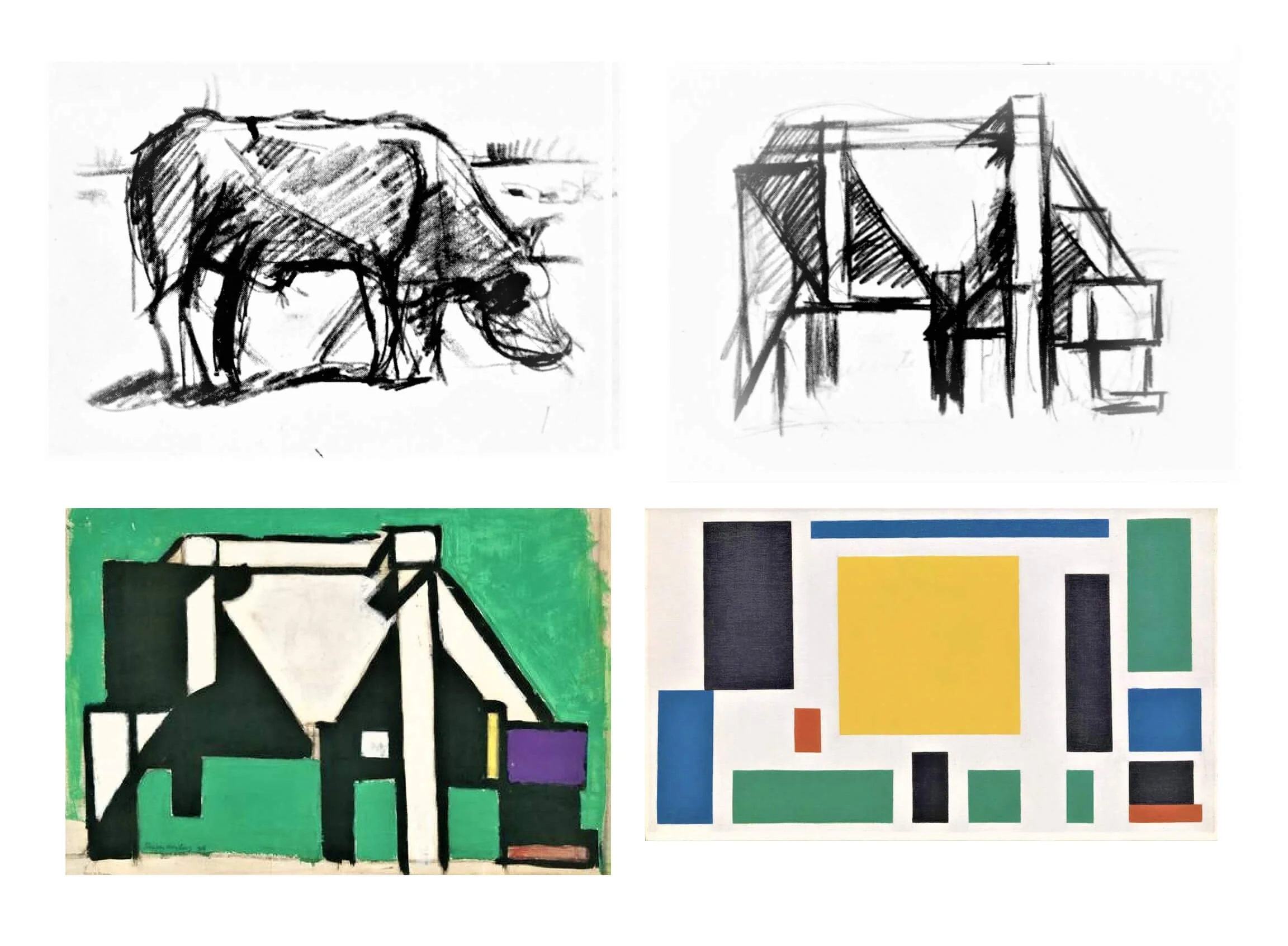
Theo van Doesburg; images 1–3: studies for Composition VIII (The Cow), c. 1917; image 4: Composition VIII (The Cow), c. 1918
Traditionally we would not put this capacity in the category of "knowledge", because it is neither "knowing that" nor "knowing how"; rather, we would describe it as something an individual "has" or something an individual "is". Here it is the mental apparatus an architect builds up, and it is precisely what makes them an architect. According to Vervaeke, the apparatus of perspectival knowing gives us our situational awareness and shapes the episodic memories we form from our perspective, "what it is like".
In the somewhat abridged film scene quoted above, the psychiatrist Sean tells Will that nothing Will tells him interests him, because he could read all of it himself in some book; what interests him is Will's experience, "who he is". Implied in this is that our episodic memories, our knowledge of what something is like, are qualitatively different from knowledge learned from books. Implied, too, is that learning something perspectivally carries special weight in who we are and what we become — because these memories are shaped subjectively, they bear the unique imprint of our cognitive apparatus.
Perspectival knowing is, quite literally, lifelong education: life experience, travel and exposure to different ambiences and situations fill our episodic memory, a fund of knowledge of "what it is like", and that fund in turn calibrates the mental set with which we size up every new situation. Architecture is a profession of long incubation: architects under 40 are called young architects, and perhaps this is the reason why. The journey through Italy, France and Greece that young members of the European elite made in the 17th and 18th centuries to complete their education, known as the Grand Tour, was once the crowning of the education of the upper class and of privileged architects. It now becomes clear that it was in fact a requisitioning expedition for perspectival knowledge. Today we have field trips, a somewhat vestigial part of the architectural curriculum, whose purpose is the same.
Architecture, unfortunately or fortunately, cannot be studied well enough from plans and photographs; it has to be visited and experienced. To know architecture perspectivally is essentially different from propositional knowledge of a plan, a façade or a detail. For architects, the episodic memory that perspectival knowing builds up is a useful and practically applicable fund of knowledge, impressions, atmospheres and sequences, which they can use as starting templates just as they use Neufert. To create architecture starting from perspectival knowledge, from "what it will be like there", means to start designing "from the target backwards": to form a vision of the perspectival experience and, working procedurally backwards, to stage an architectural setting that will evoke the intended impression. Starting from a perspectival point of departure keeps the course of procedural effort pointed at a bearing set in advance, so that the experiential outcome is not a matter of chance, "whatever comes out at the other end of the design process". To create from perspectival knowing means to address the user "in the same currency" in which the space will be "consumed" by the user: perspectivally, "what it is like there".
THE FOURTH KIND OF KNOWING
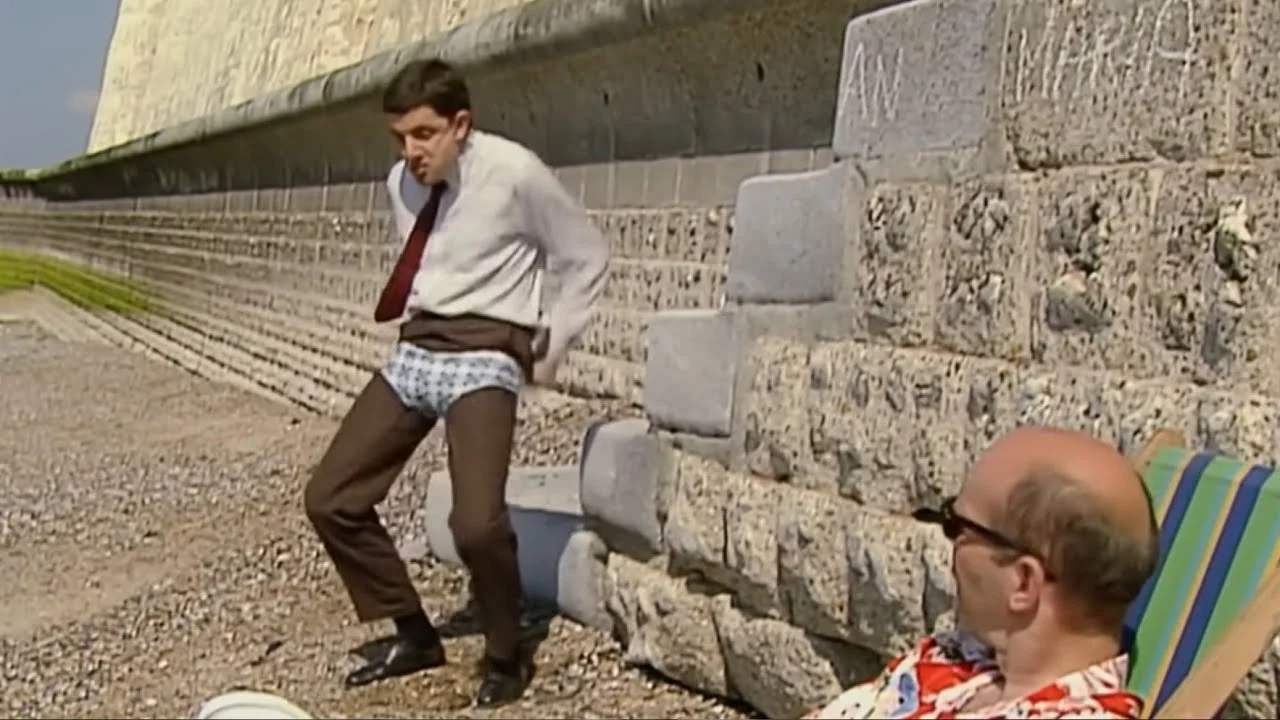
The affordances of Mr. Bean
The fourth kind of knowing in Vervaeke's model is participatory knowing: the knowing we acquire by being together, with other people but also with the world around us. Vervaeke describes it as the relationship between an agent and an arena. Some knowledge we possess whether or not we know that we know it — "you do not have to know that you know in order to have knowledge," Vervaeke stresses — and this is the case with participatory knowing. When we are together, he explains, we assume identities and we assign identities to others; he calls this co-identification. Through it the participants take on particular roles in the group and then act in accordance with them. What results from participatory knowing is the sense of fittedness, of "being well together".
Whoever has had to introduce themselves to a client and offer their services, whoever has presented a design to colleagues or clients, has an intuition of how to be with others and how to position themselves so that the relationships fit. Whoever has tried to persuade others to act on a proposal, whoever has tried to reach consensus in a group on a delicate decision, whoever has sought a place for themselves within a hierarchy, has used participatory knowing. Participatory knowing is what signals to us which perspective we should take in a given situation, which in turn determines which procedural knowledge we use, so that our action within the group is appropriate. We all know what it looks like when participatory knowing falls short and fittedness with others is not achieved. Our agency seems poorly fitted, what we attempt "doesn't land" with others and has no intended effect, the sense of connectedness is missing, we have no overview of the social dynamics, the situation is not under our control, we feel unease and a sense of not belonging.
Vervaeke explains participatory knowing by introducing another essential concept, one he takes from the psychologist J. J. Gibson: the affordance. An affordance is a real relationship between an agent and an arena that makes a kind of action possible. Vervaeke's example is a glass: the glass affords grasping, it is graspable. But many creatures (and robots?) cannot pick up the glass, so graspability is not a property of the glass. Nor is it a property of the human hand, because "I can't grasp Africa or Saturn". Graspability arises only from the relationship between agent and arena. At every moment many affordances are available to all of us, but we do not use most of them, because we are not even aware of them. "This floor is walkable," he drives the point home. "Were you thinking of that right now?"
A character who illustrates the concept of affordance is Mr. Bean, from the comedy series of the same name. The humour of the series rests on its protagonist's outrageous disregard of social conventions. Mr. Bean does things that would never even occur to an average, well-fitted person. Put another way, Mr. Bean sees and uses affordances that are not only inconceivable but completely invisible to the average viewer, and to the other characters in the series. The affordances Mr. Bean recognises and uses are, technically, available to everyone, but we are conditioned by participatory knowing and by the wish for our behaviour to fit the social context. We have acquired the knowledge of which behaviour will by no means fit in a given context — we are enculturated. The humour of Mr. Bean rests on his evident ignorance and violation of all these invisible conventions and bonds, so important to the British society of the time. Mr. Bean's actions are funny to the viewer because they are new and strange, and they are new because they are unavailable, because they, quite literally, never even cross our minds. This example shows that participatory knowing has very real consequences for our agency, making some affordances visible and available and others completely invisible, impossible to use.
To be an architect in the participatory sense means to perform a certain role that has been assigned to us, and to which certain affordances are attached. What particular affordances does the role offer the architect? The cliché is black clothing and idiosyncratic dress, as is the affordance of being somewhat nonchalant about practicality in favour of aesthetics — or at least of referring ironically to that cliché. A more serious question is how far we can go within our role, with a client, with colleagues, in public life, what we are called upon to speak about and how to act, before we begin to erode the sense of fittedness with others. How has the role of the architect changed over the last 20, 50 or 500 years, how and why does it keep changing, which possibilities, which affordances, will play a part in the architect's future role in society, and which do we currently not notice or not use? These are all important questions whose answers lie beyond the scope of this article, and for now we leave them open.
Let us instead consider participatory knowing in architecture starting from space: how participatory knowing shapes space, and how humanly shaped space suggests participatory knowing. Even a deserted meadow affords something: it can be walked across, lain on, hidden in where the grass is tall. That is already participatory knowing, a relationship between agent and arena. But no society is reflected in a deserted meadow; there are no roles in it. The same cannot be said of an empty building. An empty building, any building, carries not only affordances but also inscribed social roles: it has participatory connotations. If, for example, we study the plan of a so-called "bourgeois apartment", or set foot in one, the arrangement and proportions of the rooms and the circulation between them tell us that the space does not correspond to contemporary habits, to today's priorities and needs in housing. We sense intuitively that the bourgeois apartment was shaped for a different society, and those social relations are implied by the architecture. Architecture tells us something about what is expected of the user; it gives subtle indications of the constellation of relationships and social processes that take place in the space. For the same reason architecture is useful to archaeological anthropology.
Vervaeke holds that affordances arise from the relationship between agent and arena: if the architect shapes the arena, they thereby influence the affordances the space will suggest to the agent (the user) in interaction with the arena (the space). A typical barracks suggests entirely different affordances to its user than a tech campus: the barracks implies and embodies formality, compartmentalisation, uniformity and hierarchy, and corresponds to those values and patterns of behaviour. The Google campus, on the other hand, by mixing servant and served spaces implies informality, egalitarianism, inclusiveness and serendipity, and the space is organised, even choreographed, to affirm and encourage that kind of social dynamic. The resulting spaces reflect values, but they are also a pragmatic strategy for cultivating desired patterns of behaviour and use, by generating, or preventing, particular affordances in space. Would Google have remained the world's leading software company if it had moved all its offices and employees into a barracks? Why does Google build distributed pavilions for its employees, organised as a technology campus structured the way it is, instead of housing the organisation in a vertical, in a corporate tower, as many American corporations do?
The conclusion suggests itself that Google, as a specific legal and social organisation, requires a corresponding spatial organisation; that the two spheres need to overlap and mirror each other in their respective media so that they fit. The further conclusion suggests itself that spatial organisation has a non-trivial influence on how the legal and social organisation functions, just as the spatial arrangement of machines and workstations in a production process can, technologically speaking, be optimal or sub-optimal.
For architects, therefore, the capacity to read signals participatorily, that is, by being together with others, and to acquire knowledge of relationships, structures and social roles is of vital importance, so that they can then express them through architecture that fits those relationships and structures. An architect who entered a competition for the Google campus with a design that looked like a tower or a barracks would fare poorly. Of course, spatial organisation is not the only level at which participatory knowing is expressed — it also shows, in parallel, in form, composition, structural system, choice of materials, fittings and other aspects of the architectural work. The architect's task is to make choices within each of these aspects so that the resulting work cumulatively evokes the intended "message": two cafés can have identical plans, yet through the choice of materials, furniture, lighting and music they will tell the user who the space is for, what to expect, and how to behave there in order to fit with others.
REVALORISATION
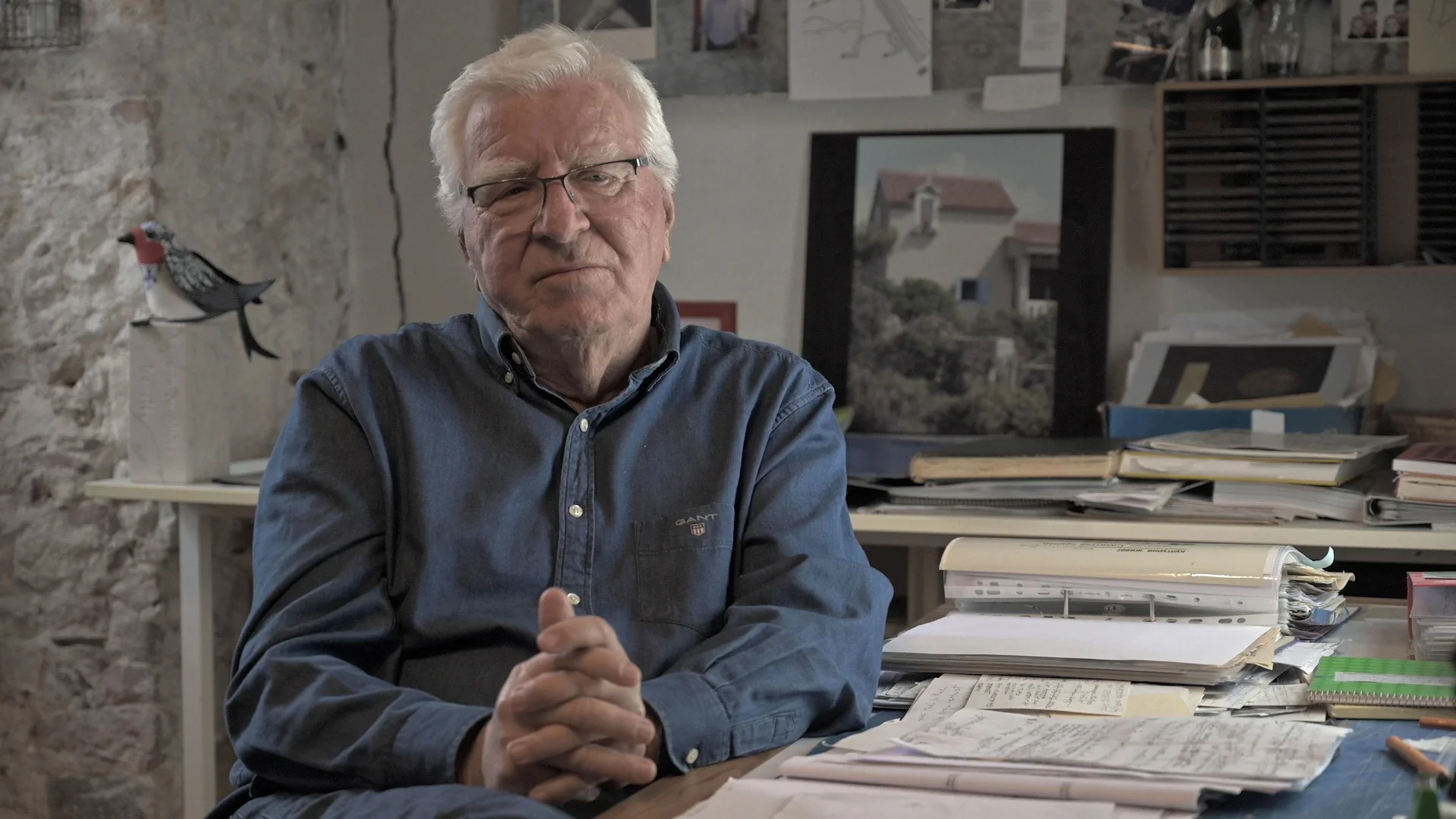
Academician Dinko Kovačić
This article is the result of a first look at architecture through Vervaeke's 4P model. With Vervaeke's vocabulary we can pose familiar architectural themes anew and examine them from a new vantage point:
1. Both poles of Venturi's dichotomy, the "duck" and the "decorated shed", in fact strive for the same goal: to make themselves salient in the observer's salience landscape — the "decorated shed" as a giant billboard, while the "duck" strategy turns architecture into a giant symbol. Moreover, the user will experience both the "duck" and the "shed" through the same "register" of knowing: the propositional knowledge of a symbol, a logo.
2. The strategy of Libeskind's Jewish Museum in Berlin can be put in a new way: Libeskind's museum is not just a sequence of galleries through which the user walks and learns about the Holocaust propositionally, from exhibits in lit display cases. Libeskind wants to turn the procedure of moving through the museum, a movement that often ends in dead ends and rooms without an exit, into perspectival knowing — Libeskind stages situations in space so that the perspectival experience of the museum's architecture is analogous to, or metaphorically represents, the perspectival experience of the Holocaust. We can say that Libeskind is trying to change the way we come to know what the museum is dedicated to: Libeskind strives to make the museum's architectural mechanism its primary content.
3. A professor at the Faculty of Architecture in Zagreb, academician Dinko Kovačić, used to give his students this advice: "Don't draw the dining room, draw the lunch." It was intuitively clear what he meant, intuitively clear how the two approaches to the same task differ in their starting point. To draw the dining room means to rely on propositional and procedural knowing — knowing that, knowing how. To draw the lunch means to rely on perspectival knowing, knowing what it is like, and on participatory knowing: how to organise space so that being together fits. The genius of Kovačić's instruction is that it concisely encapsulates the difference between the kinds of knowing, and suggests that perspectival and participatory knowing are a richer source of inspiration and a nursery of better and more interesting solutions.
Kovačić's advice is proof that the best architects, the ones we learn from, have always been well aware of perspectival and participatory starting points, and where they lacked the terminology they made do with advice like this, in the manner of a Zen koan. Vervaeke provides a vocabulary that makes conversations about what architects know, and how, systematic. The question imposes itself: what would a curriculum look like that treats perspectival and participatory knowing not as a by-product of years of practice but as a subject of instruction? The answer to that question is not in this article, but the invitation to look for it is.
